
Anderson, Indiana
Emergency Water Extraction and Water Removal in Anderson
When water is on the floor now, the immediate priority is removing it safely and stopping it from reaching more rooms. Drying and repairs come after the standing water is under control.
Standing water has a short list of priorities
Water extraction is the first service for an active loss in Anderson: a burst washing-machine hose, an overflowing fixture, a failed line above the ceiling, or stormwater across a finished basement floor. The amount matters, but the source matters just as much. Clean water, outside water, and a drain backup need different safety decisions before equipment is set down.
What removal involves
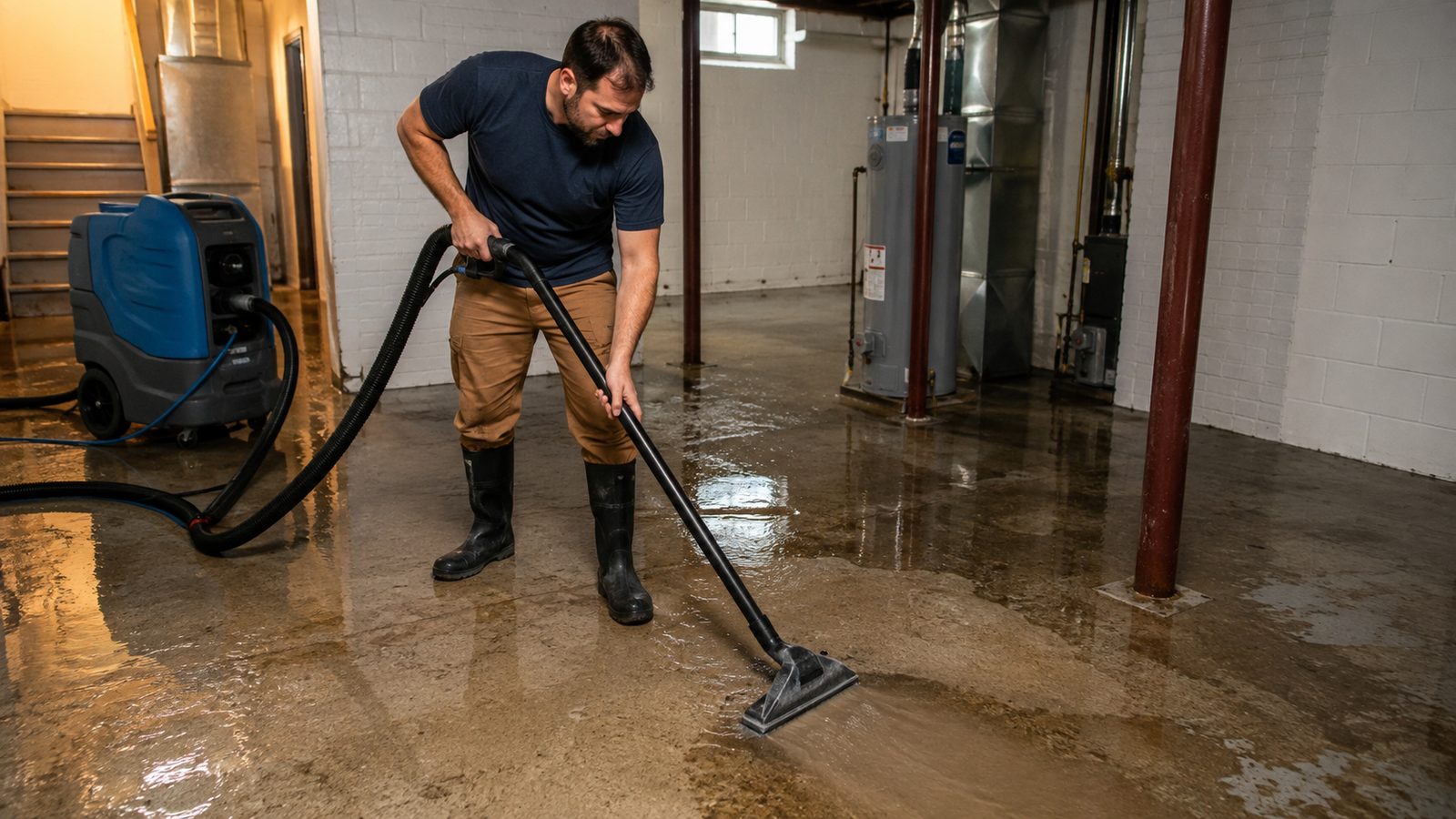
We locate the water edge, assess the source, then use extraction equipment to remove water from exposed flooring and affected carpet. The work is not complete when the floor looks dry. Moisture can still sit under finishes and inside the materials around the loss, so the extraction stage transitions into a drying plan based on readings.
Before we start, we need to know
- Whether the water is still flowing and where the shutoff or source is.
- Whether power, gas appliances, or electrical equipment are near the wet area.
- What floor covering and contents are in the room.
- Whether water passed through a ceiling, wall, drain, or exterior opening.
Water removal for homes and small businesses
A small commercial space often has less visible water than a basement but more places for it to hide: under shelving, beneath office carpet tiles, and inside base cabinets. At home, water can migrate through open doorways and down stairwells before anyone sees it. Once the water is removed, our drying and mitigation process explains what happens next. For a lower-level loss, flooded basement cleanup in Anderson covers the materials that need extra attention.
What to do before help arrives
- If you can reach the source without entering water, shut off the fixture or the home water supply. Do not take risks with electricity.
- Keep people and pets out of the wet area, especially if water came from a drain or sewer line.
- Take a few photos from a dry, safe location, then avoid moving wet material until the source is identified.
Our approach
From standing water to controlled drying
Make the area safe
We begin with the water source and any electrical or contamination concern.
Extract the volume
Removal focuses on water in the room and within accessible floor coverings.
Measure what remains
Readings determine where drying needs to continue after the visible water is gone.
Standing water is easier to handle early
Call 765-615-4599.
Water extraction questions
Can I use a wet/dry vacuum before I call?
Only if the water is known to be clean, the area is electrically safe, and you can work without standing in water. A household vacuum does not solve moisture beneath flooring or in a wall. If the source is uncertain, wait and describe it on the call.
Does water removal include drying?
Extraction removes the liquid water first. Drying is the next stage and uses air movement, dehumidification, and repeated readings to remove moisture from materials. The two are connected, but each has a different purpose.
What if water leaked from the floor above?
Keep clear of any sagging ceiling and do not puncture it yourself. Water may be held in insulation or behind the ceiling surface. Tell us where the leak started and what rooms are below it so the affected path can be assessed safely.